Czech household electricity prices averaged 5.4 CZK per kWh in the second half of 2024, according to the Energy Regulatory Office (ERÚ). For an average apartment consuming 2,400 kWh per year, that translates to roughly 13,000 CZK annually — before gas, district heating, or hot water. The room for adjustment is real and measurable.
The Czech Energy Context
Most apartment buildings in Czech cities are connected to dálkové vytápění — district heating systems — supplied by companies such as Pražská teplárenská in Prague or Teplárna Brno in Brno. Residents in these buildings do not control the fuel source but do control how efficiently they use delivered heat. Buildings constructed before 1989 (panelák housing) vary considerably in insulation quality; those that underwent the panelák renovation programmes of the 2000s and 2010s typically reduced heating consumption by 30–50%.
Electricity in Czech Republic is supplied through a liberalised market. Households choose between regulated and market tariffs via the OTE (Operator trhu s energiemi) clearing system. Supplier switching is straightforward and regulated — Czech law gives customers the right to switch supplier within 21 days of request.
Lighting: The Fastest Adjustment
LED replacement has been the most cost-effective single change available to Czech households. A standard 60W incandescent equivalent replaced by an 8.5W LED bulb reduces lighting consumption for that fitting by 86%. At Czech electricity prices, a household with 20 light points running 4 hours daily saves approximately 1,300 CZK per year from full LED conversion — a payback period of under 18 months at current lamp prices.
Czech retail chains including Lidl, Kaufland, Hornbach, and OBI stock a broad range of LED products. EU energy labelling (revised in 2021) now applies a stricter A–G scale to bulbs; most LEDs sold in 2024 fall into class E or D on the new scale, which corresponds to what was previously labelled A+ or A++.

Heating Controls in Czech Apartments
Apartments connected to central heating systems are typically fitted with termostatické hlavice (thermostatic radiator valves, TRVs) and a heat meter (kalorimetr or indikátor topných nákladů). The heat meter records consumption per unit, and the annual heating invoice is split among residents based on readings.
Programming heating via smart TRVs — products such as the Danfoss Eco or the Tado° system, both available through Czech retailers — allows room-by-room setback during unoccupied hours. A temperature reduction of 1°C maintained consistently reduces heating demand by approximately 6% in a well-insulated space, and 3–4% in older construction.
Night Setback
Setting bedroom radiators to 16–17°C during sleeping hours rather than the common living-room temperature of 21°C is a widely recommended practice. Czech energy advisory body Energetická úspornost estimates that residents who use night setback consistently across winter months reduce heating bills by 10–15% compared to those who maintain constant temperature.
Appliances and the EU Energy Label
Czech households replaced major appliances at an average cycle of 11 years as of 2023 (Czech Statistical Office, ČSÚ). When purchasing a new washing machine, dishwasher, or refrigerator, the EU energy label provides a direct consumption figure in kWh per year or per cycle. The difference between a class A dishwasher (approximately 247 kWh/year) and a class D model (approximately 294 kWh/year) amounts to roughly 250 CZK annually at current prices — not significant on its own, but compounded across multiple appliances and years.
Refrigerators and freezers account for a disproportionately large share of standby electricity in Czech apartments because they run continuously. A 15-year-old refrigerator may consume 350–500 kWh per year; a current class A equivalent typically uses 100–150 kWh. The savings justify early replacement in many cases.
Czech households that replaced their refrigerator, washing machine, and dishwasher with current-generation appliances simultaneously reduced electricity consumption by an average of 22% in a pilot monitored by ČEZ distribution between 2021 and 2023.
Zelená Úsporám+ (Green Savings+)
The state subsidy programme Zelená úsporám+, administered by the State Environmental Fund (SFŽP) under the Ministry of the Environment, provides grants for insulation, window replacement, heat pump installation, solar thermal and photovoltaic systems, and green roofs on residential buildings. For individual apartment owners participating through a housing cooperative or SVJ (owners' association), collective applications are accepted.
In the 2024 call, grants reached up to 50% of eligible costs for insulation and up to 95% for households meeting low-income thresholds. Applications are submitted electronically via the SFŽP portal. The programme has disbursed over 22 billion CZK since its relaunch in 2022.
Standby Power and Phantom Loads
Consumer electronics left on standby — televisions, routers, gaming consoles, speakers — together account for a significant share of residential electricity in Czech apartments. Czech Energy Regulatory Office research from 2022 estimated that standby loads represent 6–10% of total household electricity consumption in dwellings with above-average electronics density.
Switchable power strips (prodlužovací kabely s vypínačem) eliminate standby draw from entertainment systems when not in use. At 5.4 CZK/kWh, the annual standby cost of a mid-range flat-screen television left on standby (approximately 0.5W) is modest — about 24 CZK — but a gaming console in rest mode (3–10W) adds 140–470 CZK annually.
Solar Panels for Apartments
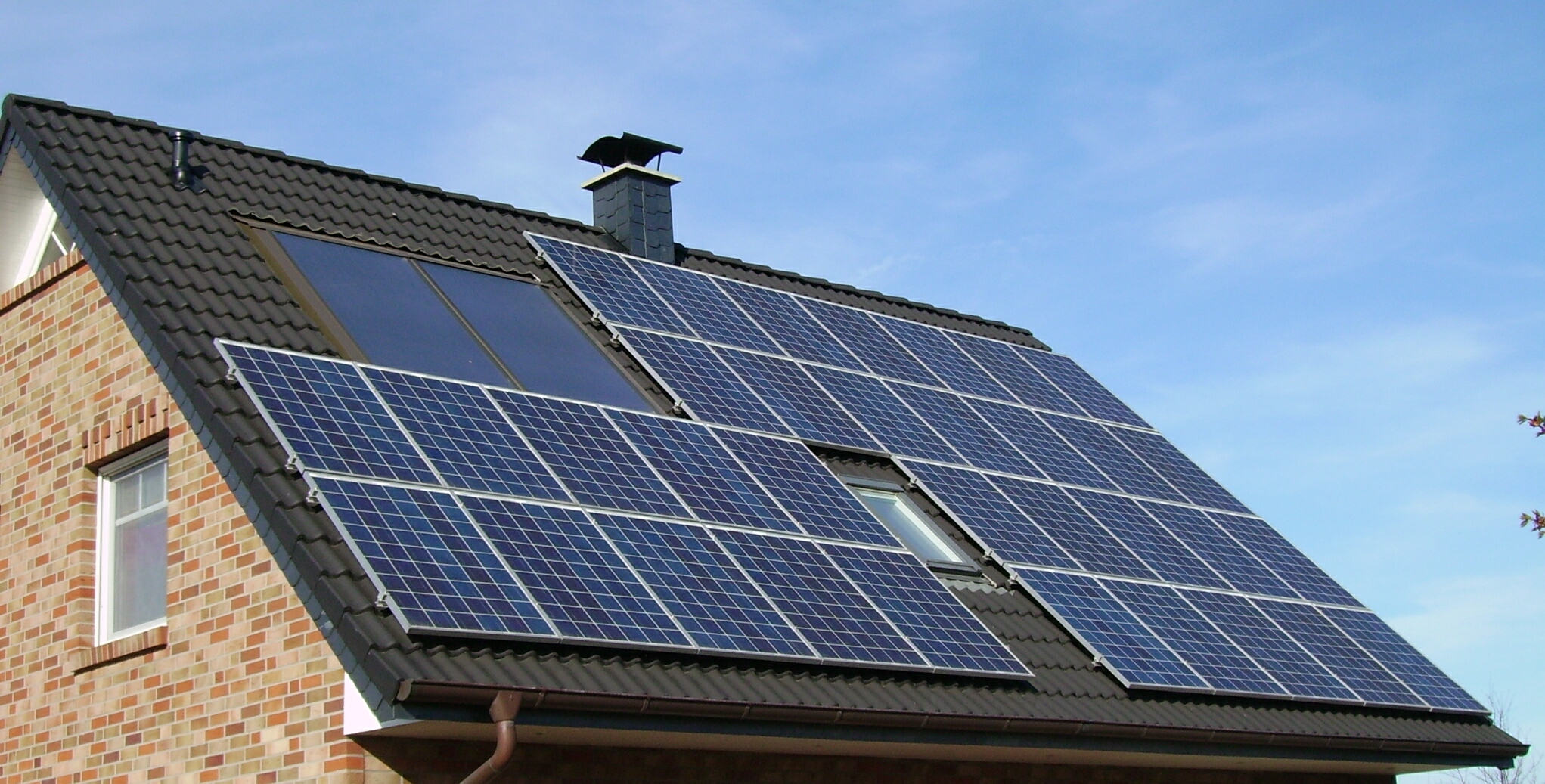
Balcony solar panels — solární elektrárny na balkón — gained traction in Czech cities from 2023 onward, following regulatory changes that simplified micro-generation registration below 10 kWp. A 400W panel mounted on a south-facing balcony produces approximately 350–420 kWh per year in Prague's latitude, offsetting 6–8% of a typical apartment's electricity consumption. Registration of units below 10 kWp requires only a notification to the distribution system operator (DSO), not a full grid connection licence.
Last updated: 15 April 2026